
Hello, I’m Laura an SLH volunteer. Whilst helping my daughter to learn about the natural world, I have become acutely aware of how little I know about birdlife in the Heatons. So, I will be bringing you with me on my journey to learn more…
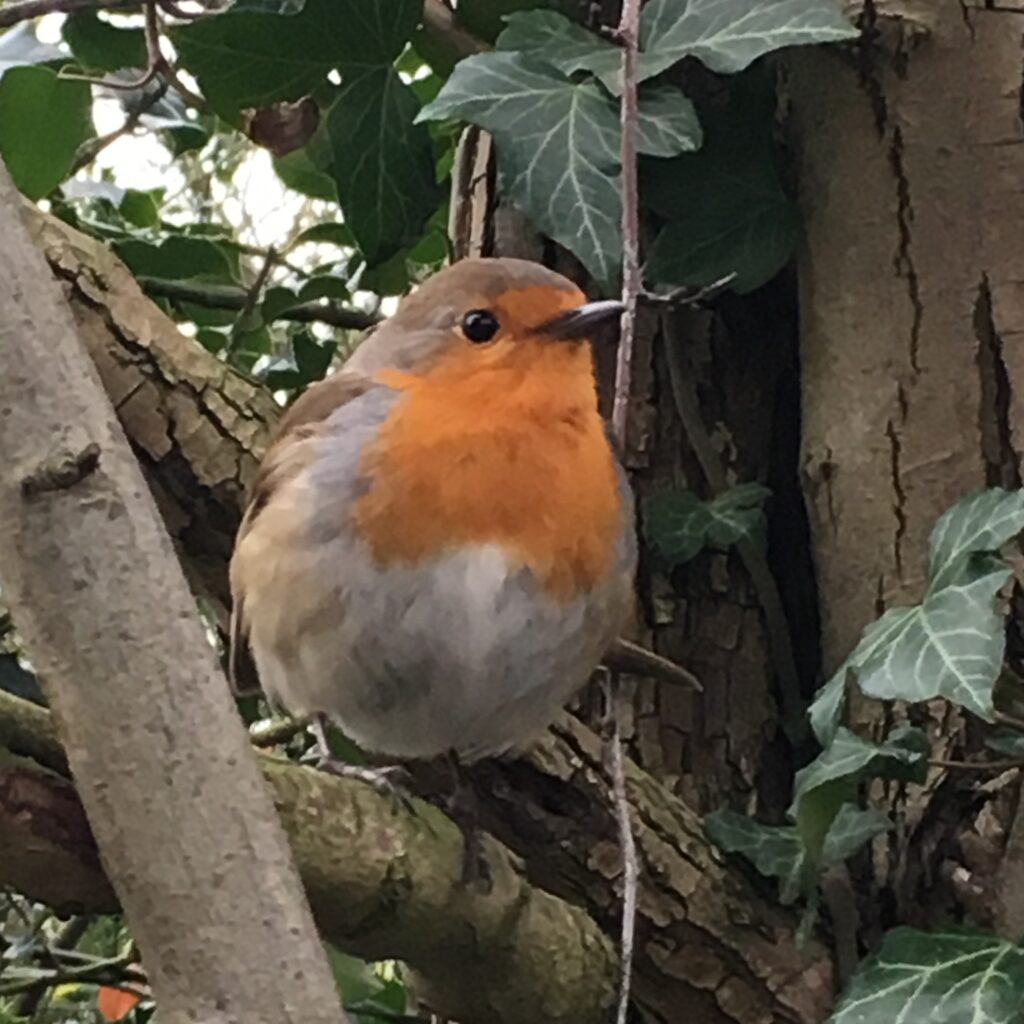
First up is … the Robin!
A UK favourite and one of the easier ones to spot. Its latin name is Erithacus rubecula.
Where do Robins live?
In Britain, Robins are both a resident species and a migrant species. During the winter months, Robins from northern and eastern Europe visit Britain (BTO, 2026). They are fairly confident around humans and are frequently spotted in suburban and urban environments as well as wooded areas and farmland (RSPB, 2026).
Where and when can I spot a Robin in the Heatons?
You’ll likely be able to spot Robins year-round in most locations in the Heatons. Heaton Mersey common with its wooded areas and proximity to suburban streets makes it an idea spot to look out for a Robin.
What do Robins sound like, and when will I hear one?
The Royal Society for the Protection of Birds (RPSB) describes Robin song as “a melodic, high-pitched whistle. Each verse is different, but most follow a similar structure: short (two to four second), gushing phrases – punctuated with abrupt pauses.” You can hear Robins most of the year and due to streetlights you can also hear them at night!
The RSPB and British Trust for Ornithology (BTO) webpages include bird song and call recordings. Links below.
What’s on a Robin’s menu?
Robins eat worms, fruit, seeds and insects. Look around you the next time you are digging in the garden. I often see my local opportunistic Robin perched on a fence waiting to see what I unearth.
Where do Robin’s nest?
The female robin builds the nest, typically close to the ground. Robin’s are know to choose novel locations including kettles, lanterns, flower pots, car bonnets, boots, post boxes and even clothes pockets (Woodland Trust, 2026). What all these nests have in common, is an open front rather than a closed front with a small entry point.
Want to learn more?
I gathered the information for this article from the following sources…
BTO (2026) British Trust for Ornithology, BirdFacts Species: profiles of birds occurring in the United Kingdom (www.bto.org/learn/about-birds/birdfacts/robin , accessed on 15/06/2026).
RSPB (2026) Royal Society for the Protection of Birds, Birds and Wildlife: Robin (www.rspb.org.uk/birds-and-wildlife/robin, accessed 15/06/2026).
Woodland Trust (2026) ROBIN https://www.woodlandtrust.org.uk/trees-woods-and-wildlife/animals/birds/robin/ accessed 15/06/2026).